


Onice Rosso: Premium Translucent Red Onyx Slabs
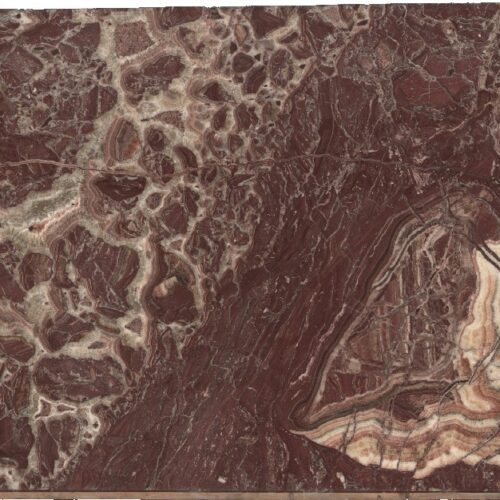
Onice Rosso is a translucent red onyx quarried primarily in Italy, Tanzania, and Iran. This natural stone displays deep ruby red tones blended with yellow ochre, separated by dramatic white and dark veining. The stone’s defining characteristic is its ability to transmit light, making it the preferred choice for backlit applications in high-end residential and commercial projects.
Each onice rosso slab is unique. The stone’s patterns form naturally as mineral-rich water deposits calcite in limestone caves, creating the distinctive banded appearance. With a hardness of 6.5 to 7 on the Mohs scale, onice rosso requires professional resin treatment during processing to strengthen the material before cutting.
A Stone Rooted in Ancient Tradition
Onyx has been prized since ancient civilizations. The Romans used translucent stone sheets in place of glass, and Emperor Nero commissioned a temple built with onyx walls that allowed sunlight to illuminate the interior without windows. The name "onyx" comes from the Greek word for fingernail, referencing the stone's layered, organic appearance.
Onice Rosso specifically gained prominence during the Renaissance in Italy, where artisans used it for decorative inlays, religious artifacts, and palace interiors. Italian quarries in regions like Tuscany became known for producing the finest red onyx specimens. Today, onice rosso remains a symbol of luxury in contemporary design, bridging centuries of craftsmanship with modern lighting technology.
Visual Impact and Design Appeal
Onice Rosso features an intense color palette. The dominant ruby red base transitions through zones of amber, honey, and yellow ochre. Dark burgundy and charcoal veins cut across the surface, creating movement and depth. White calcite bands add contrast and highlight the stone's natural formation process.
The stone's translucency varies by thickness. At 10mm to 15mm, onice rosso allows significant light transmission, creating a warm amber glow. At 20mm to 30mm, the stone becomes more opaque but still reveals internal patterns when backlit. This property transforms the material from a static surface into a dynamic light feature.
When polished, onice rosso develops a glass-like finish that enhances color saturation. The surface reflects ambient light while the translucent body diffuses backlight, creating layered visual effects. During daylight, the stone appears rich and vibrant. At night with backlighting, it becomes luminous and warm.
Applications and Uses
Onice Rosso works best in interior applications where its translucency can be showcased:
Backlit Feature Walls: The primary use for onice rosso is backlit wall cladding. LED panels installed 2cm to 10cm behind the stone create even illumination without hot spots. The stone transforms lobbies, restaurants, spas, and residential accent walls into focal points. Warm white LEDs (2700K-3000K) enhance the red tones, while cool white (5000K-6000K) brings out amber and yellow hues.
Countertops and Islands: Backlit onice rosso countertops work in kitchens, bars, and bathroom vanities. The stone requires edge-lit or under-mounted LED systems. At typical countertop thickness (20mm), the material provides structural integrity while maintaining translucency. The backlit effect is most dramatic in bar counters and reception desks where the stone can be viewed from multiple angles.
Decorative Elements: Onice rosso appears in fireplace surrounds, table tops, decorative columns, and custom furniture. Book-matched slabs (mirror-image pairs from the same block) create symmetrical patterns for dramatic installations. The stone also works for shower walls, statement pieces, and architectural details where light and color are design priorities.
Not Recommended For: Exterior applications, high-traffic flooring, outdoor kitchens, or areas exposed to standing water. Onice rosso is calcium-based and susceptible to etching from acids, weathering from outdoor elements, and scratching in heavy-use zones.
Technical Considerations for Backlighting
Successful backlit installations require planning. LED panels should provide 2,500 to 3,000 lumens per square meter for even coverage. The distance between the light source and stone affects uniformity. Closer spacing (2cm-5cm) works for thin slabs, while thicker pieces need 5cm-10cm plenum distance.
Test your specific slab before installation. Some areas may be more transparent than others, potentially revealing individual LED points. Adding a diffusion layer between the LEDs and stone eliminates this issue. Professional installers often bond onice rosso to glass backing, which improves structural stability and light distribution.
Caring for Onice Rosso
Onice rosso requires regular maintenance to preserve its appearance:
Sealing: Apply penetrating sealer every 6 to 12 months. The stone's porosity makes it vulnerable to staining from oils, wine, and acidic substances. Use sealers specifically formulated for onyx and marble.
Daily Cleaning: Wipe surfaces with pH-neutral stone cleaner and soft microfiber cloths. Avoid vinegar, lemon juice, bleach, and abrasive cleaners. These products etch the calcium carbonate surface, leaving dull spots.
Spill Management: Clean spills immediately. Coffee, wine, and acidic foods penetrate quickly. Blot rather than wipe to prevent spreading.
Professional Care: Schedule annual professional cleaning and resealing for high-use surfaces. Professionals can polish out minor scratches and restore the original finish.
Transform Your Space with Onice Rosso
Ready to create a stunning backlit feature with onice rosso? Our team sources premium slabs directly from Italian and international quarries. Contact Superior Selected Stone today to view our current onice rosso inventory, request samples, or schedule a consultation with our design specialists. Your vision for dramatic, translucent stone deserves the finest materials.